
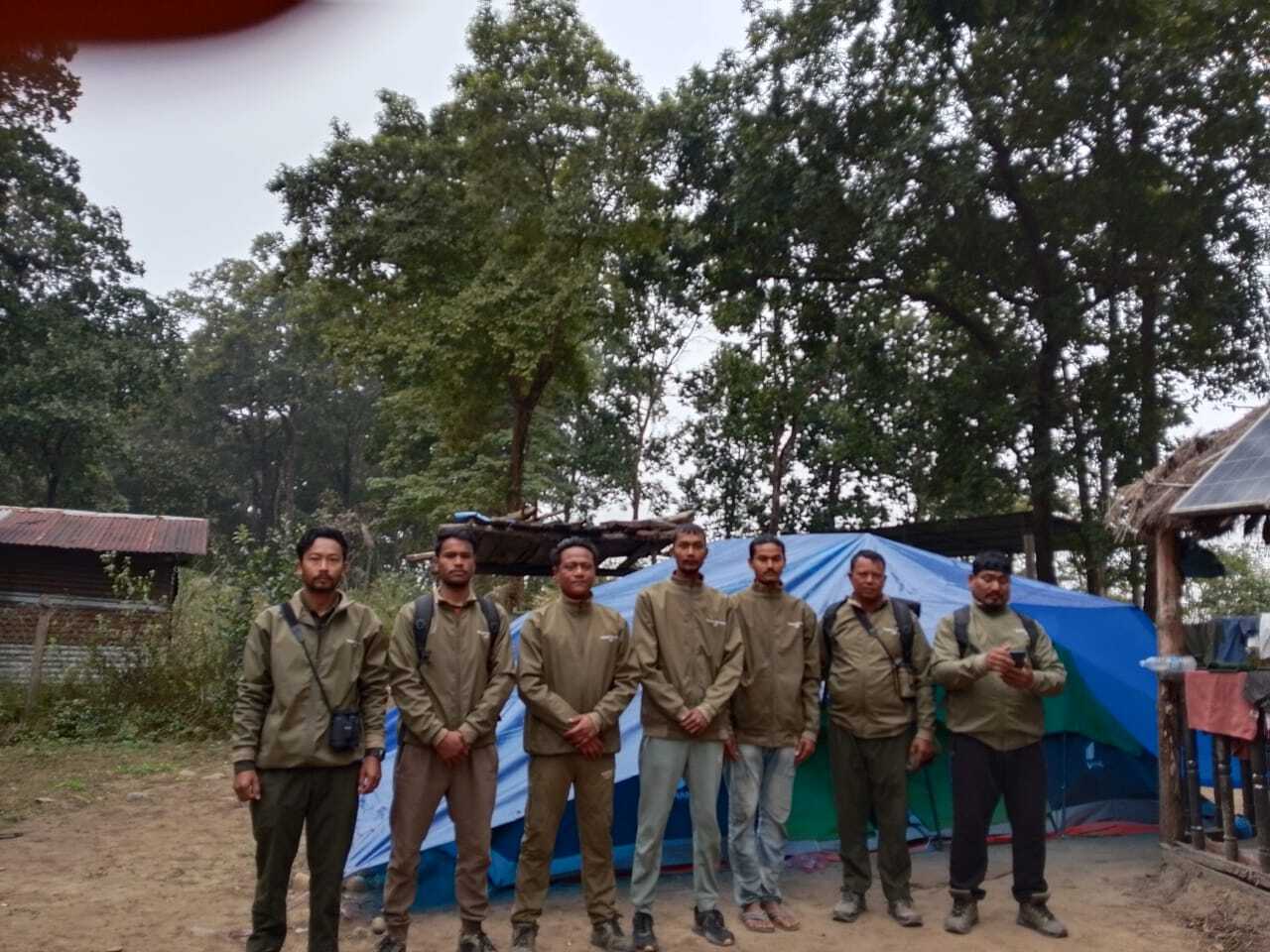
Nepal Tiger Trust (NTT) teams have returned after successfully completing the tiger survey across the Chitwan–Parsa Complex. As previously noted, the nationwide survey began on December 16, 2025, and NTT’s work in this landscape concluded on February 19, 2026. NTT deployed three technicians for this effort, with Baburam Mahato and Raju Kumal each serving as team leaders for their respective groups.
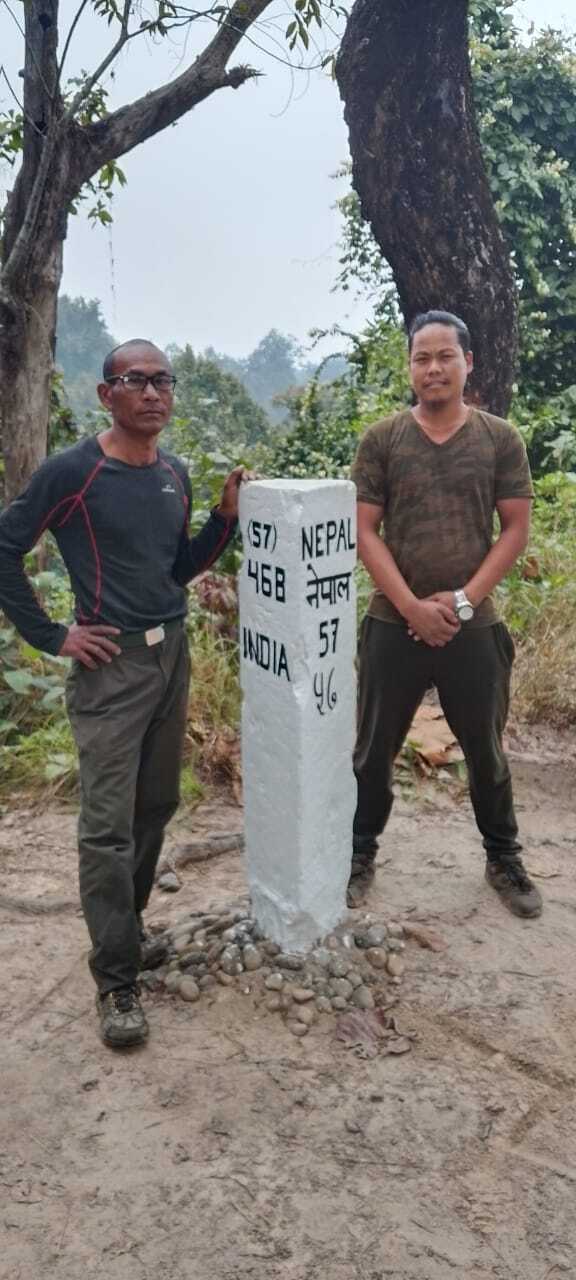
This report summarizes the field experiences of senior technicians Baburam Mahato and Raju Kumal. Although many survey teams operated across the Chitwan–Parsa Complex, Baburam and Raju’s groups were each responsible for surveying three camera-trapping blocks. Each team consisted of 6–7 members, including experienced technicians from NTT or the National Trust for Nature Conservation, game scouts from the respective areas, college students, nature guides, community-based anti-poaching unit members, and a cook.
Baburam’s team surveyed three blocks, camping first at Temple Tiger Jungle Lodge in Chitwan National Park (CNP) , then at Lame Tal post, and finally at Rato Mate in Parsa National Park (PNP). After completing the second block, Baburam returned to Meghauli, and NTT trainee tiger technician Subhas Mahato continued the work for the final block. Similarly, Raju’s team began at Tiger Tops Jungle Lodge, then moved to Bote Simara inside CNP, and completed their final block in PNP, covering the Ghode Masan area.
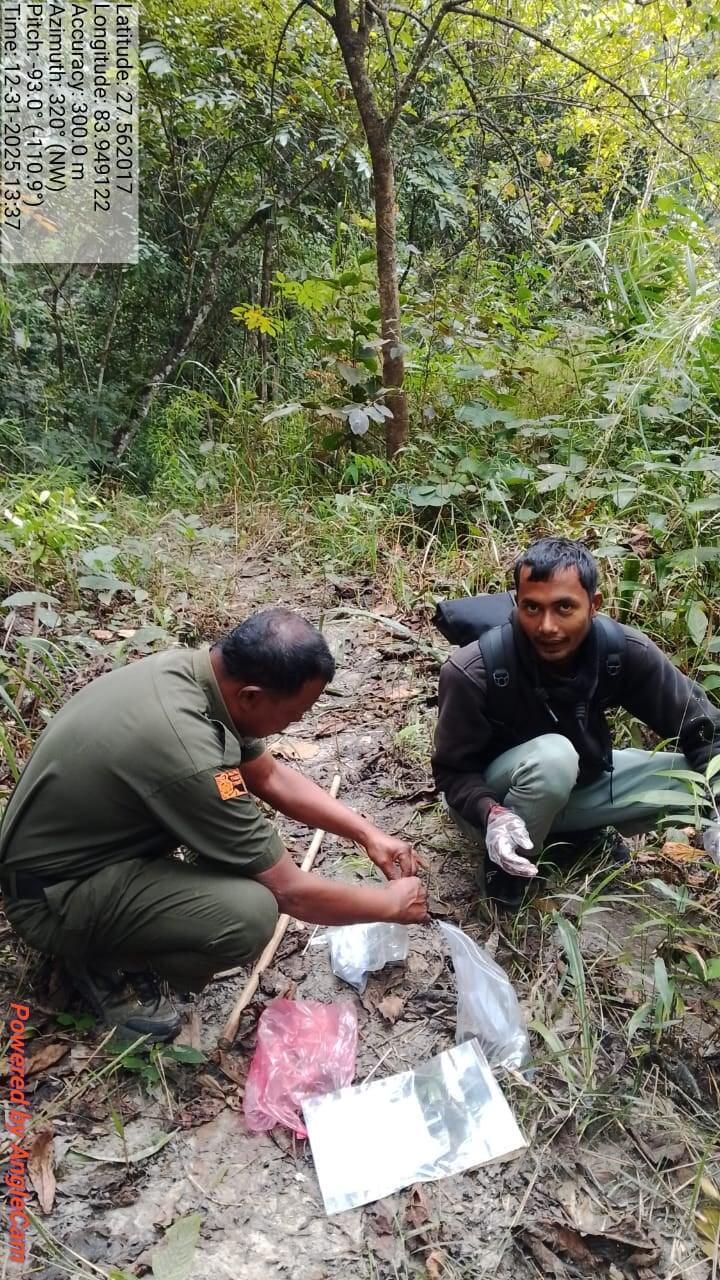
Collectively, the three NTT team members spent 178 days in the field. Each team stayed an average of 22 nights per block and deployed camera sets at 119 locations. In addition to camera trapping, the teams collected tiger scats for genetic and dietary analysis.
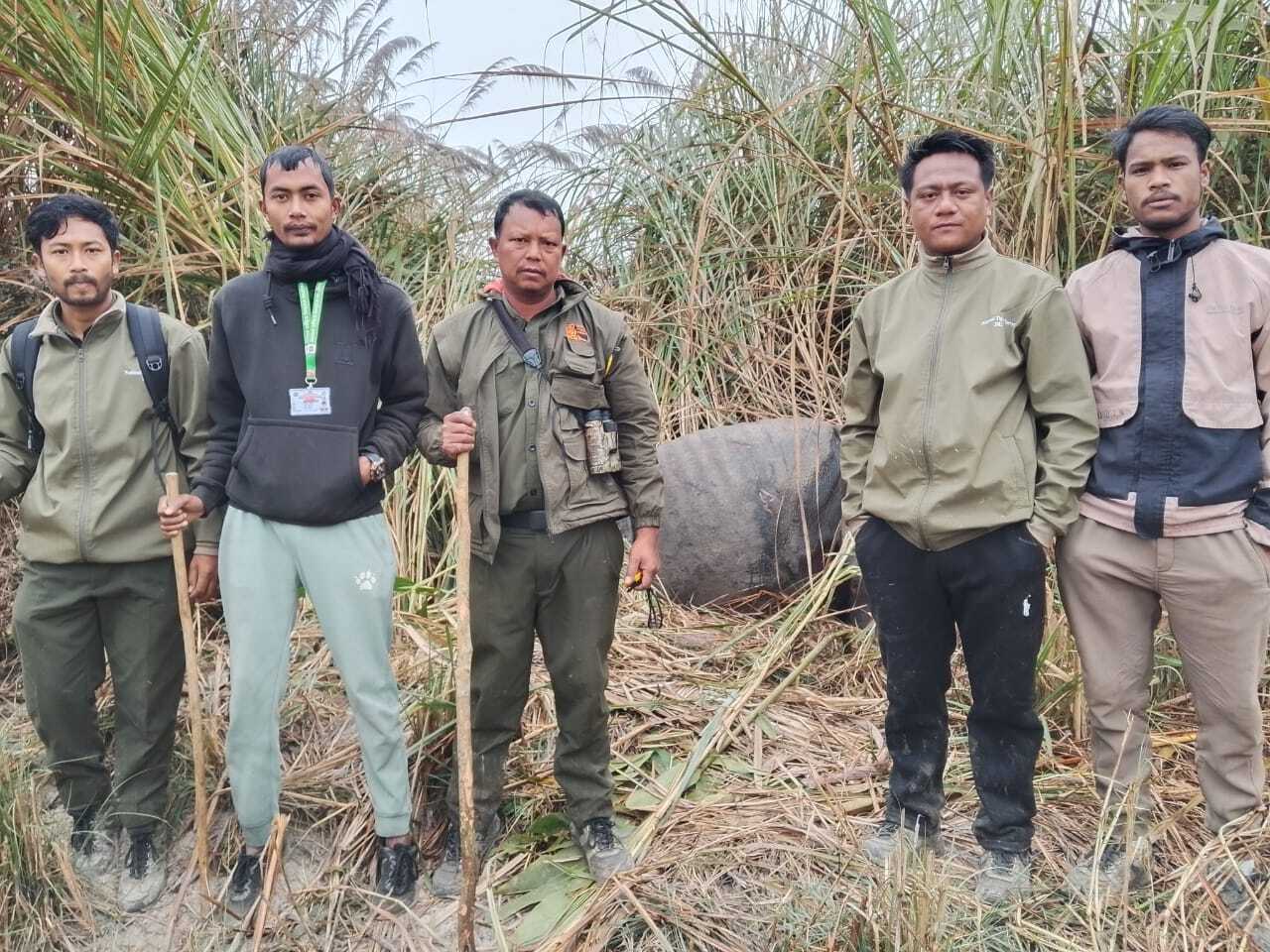
During the survey, the field teams documented several notable observations. They encountered a dead rhino at Amaltari Ghat in CNP, which had died from injuries sustained during a territorial fight. In PNP, the team also came across a poacher carrying a firearm. Additionally, they reported the theft of 14 cameras in PNP and damage to four more cameras caused by wild elephants in both PNP and CNP.
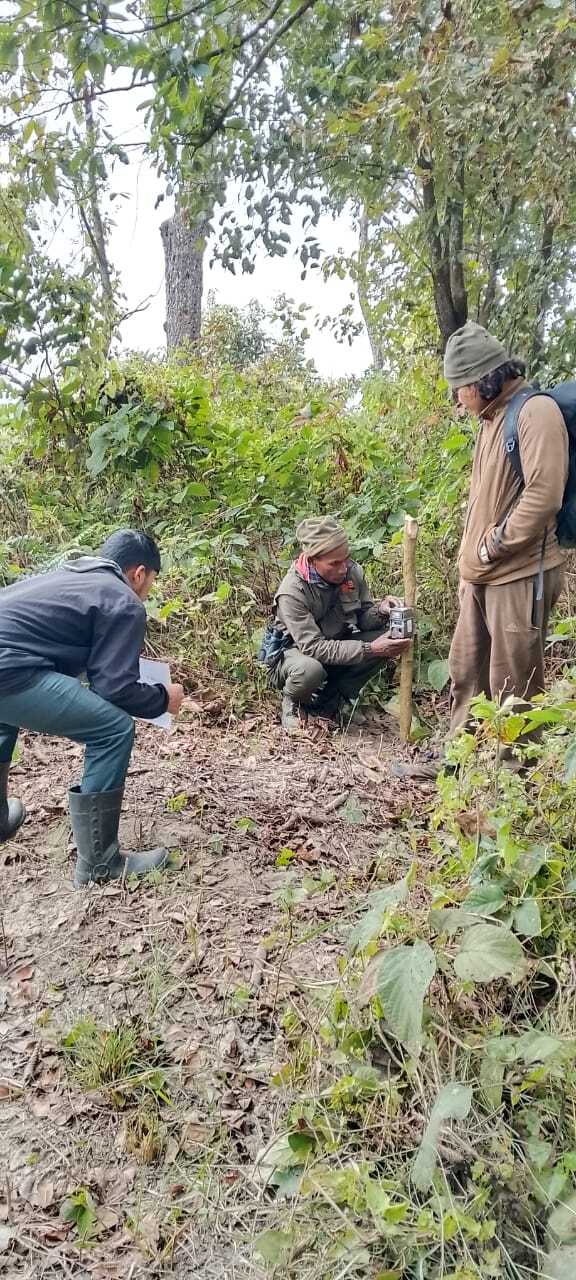
Analysis of tiger photographs captured during the nationwide survey is currently underway and will be reported collectively for the entire country once completed. Meanwhile, the 14 NTT camera traps used in the Chitwan–Parsa Complex have now been redeployed to Suklaphanta National Park to support the ongoing tiger survey there.
In the meantime, NTT will continue Long-Term Tiger Monitoring in the western buffer zone as ten new camera traps are scheduled for delivery this week. Camera coverage will be expanded further once all units currently deployed in Suklaphanta National Park are returned.
We invite you to support our conservation efforts by donating and sharing this cause. To stay updated with the latest tiger news, please subscribe